Introduction: Reshaping Manufacturing's Future
In today's world, sustainability has become an irreversible trend across industries. Facing unprecedented environmental challenges, there's an urgent need to re-examine production models and consumption habits. The factories of tomorrow could transform from waste-filled sites into resource circulation hubs, where each product iteration and production optimization means less waste and more value creation.
This transformation hinges on how we reconsider material choices, production methods, and recycling innovations. Among sustainable solutions, thermoplastic polyurethane (TPU) stands out as a material that balances durability with sustainability, especially when combined with additive manufacturing technologies like FDM 3D printing.
TPU: The Green Potential of a Versatile Material
TPU is a durable, flexible material widely used in FDM 3D printing, with applications ranging from athletic shoe soles to automotive components and medical devices. Its true potential lies in recyclability—while not biodegradable, TPU's thermoplastic properties allow it to be reshaped and reused multiple times through various recycling processes.
This recyclability presents both technical and ethical considerations. As responsible manufacturers and consumers, choosing sustainable materials and participating in recycling programs becomes an obligation to protect planetary resources and reduce environmental impact.
FDM 3D Printing: Reducing Waste at the Source
Compared to traditional subtractive manufacturing methods (like foam block carving), FDM 3D printing offers significant sustainability advantages. Traditional methods typically waste 30-60% of material when producing items like seating, with custom orthotic shoe inserts wasting 30-50% or more depending on complexity.
FDM printing, as an additive process, uses material only where needed, minimizing waste before even considering recyclability. Additional benefits include:
- Greater design freedom: Enables complex geometries impossible with traditional methods
- Faster production cycles: Accelerates prototyping and custom manufacturing
- Lower production costs: Particularly advantageous for small-batch and customized production
Innovative TPU Printing Technology
Recent advancements in TPU printing technology demonstrate how innovation can enhance both performance and sustainability. One such development enables higher precision and efficiency when printing with soft TPU materials, reducing waste while improving product durability.
Key advantages of this technology include:
- Improved printing accuracy for finer, more complex products
- Increased printing efficiency shortening production cycles
- Reduced material waste lowering costs and environmental impact
- Enhanced product performance extending useful lifespans
The TPU Recycling Process: Closing the Loop
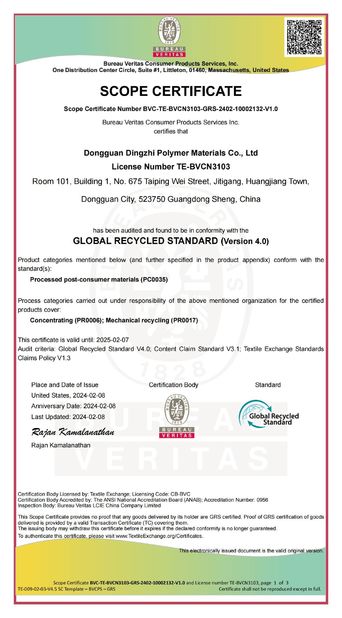
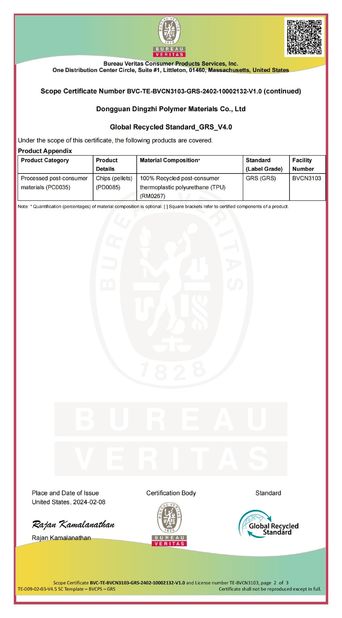
TPU recycling involves shredding material into small pieces for reprocessing. This recycled TPU can be incorporated into new 3D printing filaments or blended with other materials to leverage TPU's flexibility, durability, and chemical resistance.
The standard recycling process includes:
- Collection of TPU waste from manufacturing scraps and discarded products
- Sorting to remove contaminants like metals or other plastics
- Cleaning to eliminate dirt and oils
- Shredding into small fragments
- Melting the shredded material
- Extruding into filament or other forms
Practical Considerations for TPU Recycling
While promising, TPU recycling presents challenges, particularly for small businesses or individual users. Most recycling companies require minimum quantities of 500-1000 kg of TPU to process, making accumulation difficult for smaller operations. Cost considerations also factor into recycling feasibility.
Collaborations with specialized recycling companies demonstrate successful models. One European initiative partners with a leading recycling firm that repurchases TPU waste, showing commitment to sustainable practices.
Case Study: The REPREX EU Project
A recent EU-funded project successfully demonstrated that 100% recycled TPU can produce orthotic shoe inserts performing equivalently to those made from virgin material. This breakthrough involved overcoming technical challenges like poor material flow from recycled TPU flakes through equipment modifications.
Quality control proved essential, as minor parameter variations affected filament diameter and printability. Shore A hardness testing validated the medical suitability of final products. Several circular business models are being explored, including:
- Internal waste reuse systems
- Subscription-based material recovery programs
- Fully integrated recycling solutions for clinics
Future Directions in TPU Recycling
Ongoing research aims to optimize TPU recycling through several approaches:
- Material preprocessing: Developing more efficient cleaning, separation, and shredding techniques
- Process refinement: Exploring gentler melting and extrusion to minimize thermal degradation
- Additive research: Investigating supplements to improve recycled TPU's flow, strength, and durability
- Quality systems: Establishing rigorous testing protocols for recycled filament performance
Expanding Applications for Recycled TPU
Beyond orthotics, recycled TPU shows promise for diverse applications:
- Athletic equipment: Shoes, protective gear, and balls benefiting from cushioning properties
- Automotive components: Interior parts, seals, and vibration dampeners
- Consumer electronics: Durable, customizable cases and covers
- Medical devices: Meeting stringent healthcare requirements
Policy Support for Circular Systems
Advancing TPU recycling requires coordinated efforts across sectors:
- Standardization: Establishing uniform recycling protocols
- Financial incentives: Subsidies to offset recycling costs
- Education: Raising awareness about recycling participation
- Innovation funding: Supporting technological advancements
Conclusion: Toward Sustainable Manufacturing
As environmental concerns intensify, TPU recycling methods help reduce plastic waste while making 3D printing more sustainable. Whether through individual efforts or industry collaborations, pursuing material recycling represents a crucial step toward circular manufacturing models that conserve resources and minimize environmental impact.


 Pesan Anda harus antara 20-3.000 karakter!
 Indonesian